Filter by topic and date
IESG Retreat
- Jari Arkko IETF Chair
10 May 2016
The IESG has just had a two and half days of meetings in Cambridge, Massachusetts. These events are an important opportunity for our group to meet and discuss broader topics and IETF work in more depth than is possible during the regular IETF meetings.
his time our meeting discussed topics around IETF and Bluetooth collaboration, Internet privacy, IETF working group charters, the RFC series, area director job descriptions, mentoring, and many others.
The IESG discussed some of the trends around us, and the need to evolve the IETF system along with them. Some of the things we see in our future are linking the work on specifications to work on code and deployment through efforts like hackathons and interops. We also see a lower bar for participation, sponsorship models that focus on things beyond meetings, and increased online collaboration. We might even experiment with completely online virtual meetings in the future.

We also discussed the role of requirement, use case, and problem definition documents in IETF work. There is no one-size-fits-all approach to different working groups. But the IESG wanted to be clear that the essence of IETF work and the energy often comes from working on protocol solutions. We were concerned about cases where it takes a long time to get to that work. Working groups should NOT feel they need to sequence their work in waterfall style. In fact, working in parallel with solutions and other supporting documents (and code!) is often the best approach. And some of the supporting documents need not necessarily always be RFCs; wikis, for instance, are a fine approach as well.
Mark Powell, Executive Director for the Bluetooth SIG and Marcel Holtmann, Chair of the Bluetooth SIG Internet Working Group, joined us to discuss about IETF and Bluetooth organisations, and how we can work together. It was interesting to note that these — both highly successful — organisations work in quite different ways. But both use each other’s technology, such as the IETF 6LOWPAN encapsulation used in Bluetooth systems and Bluetooth being one of the obvious link layers underneath many Internet of Things deployments. In the future even more interaction between the two organizations is expected, as many devices connected over Bluetooth will need to communicate with a broad ecosystem of peers, some over the Internet and in the cloud. People capable of participating work in both Internet- and Bluetooth-level work are much needed in making this happen.
We also had an opportunity to interact with the local research community, and visited MIT Media Lab, focusing mostly on some of the emerging Internet of Things developments. The IESG was particularly interested in the security and semantic interoperability aspects of some of these efforts. Several of us wanted to stay in the “Lego Learning Lab — Lifelong Kindergarten” and start hacking something, but we had to return back to the meeting and other topics.

We reviewed the state of work in improving privacy in the Internet, with a view to institutionalizing better handling of privacy in the IETF and IESG. We also considered management needs in an all-encrypted world brought up last year in the MARNEW workshop. Some good initiatives (LURK BOF, various ideas from the ACCORD BOF, and so on) are proceeding, and should be viewed as improvements that the IETF considers just like other proposals. The IESG also got an update on “Cryptowars” situation from Jeff Schiller.
The IESG discussed the role of Designated Experts in IANA allocations. These experts are obviously the primary decision point when allocation requests come from outside the IETF. But for IETF documents going through last calls, while we expect the experts to perform a review whose results are taken very seriously, the ultimate decision authority rests on the IETF community. The IESG will ensure that our processes take this into account.
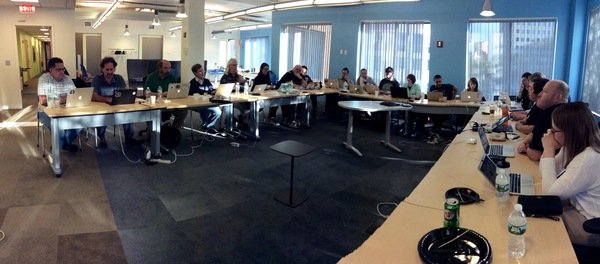
Other topics in the meeting included looking at the role of the Independent Stream publishing path for RFCs, the path forward from discussions at the last IETF meeting about doing IPv4 work, scheduling training and newcomer’s events on Sundays before IETF meetings, training and mentoring activities in general, plenary arrangements, and many others. We also made a periodic review of the IESG Discuss criteria document, and moved some working groups between ADs to balance workload and find the right expertise. We also discussed a number of changes to the desired expertise for Area Directors which the IESG soon has to send to the nominations committee for the next round of leadership selections.
Of course, a big part of a retreat like this is not so much the specific topics, but giving an ability for the team members to know each other, talk to each other freely, and do some team building. This time we paid special attention to having parts of the meeting days reserved for unscheduled interaction. We also ran some of the discussion in an “open space” or “unconference” style, which seemed like a nice experience.
Finally, I wanted to thank John Leslie, Susan Hares for taking the essential notes, Alexa Morris, Kathleen Moriarty, and Alia Atlas for the various local arrangements and expertise, and EMC for hosting us at their office!